A Chicken for the Week
My mother learned how to make one thing last.

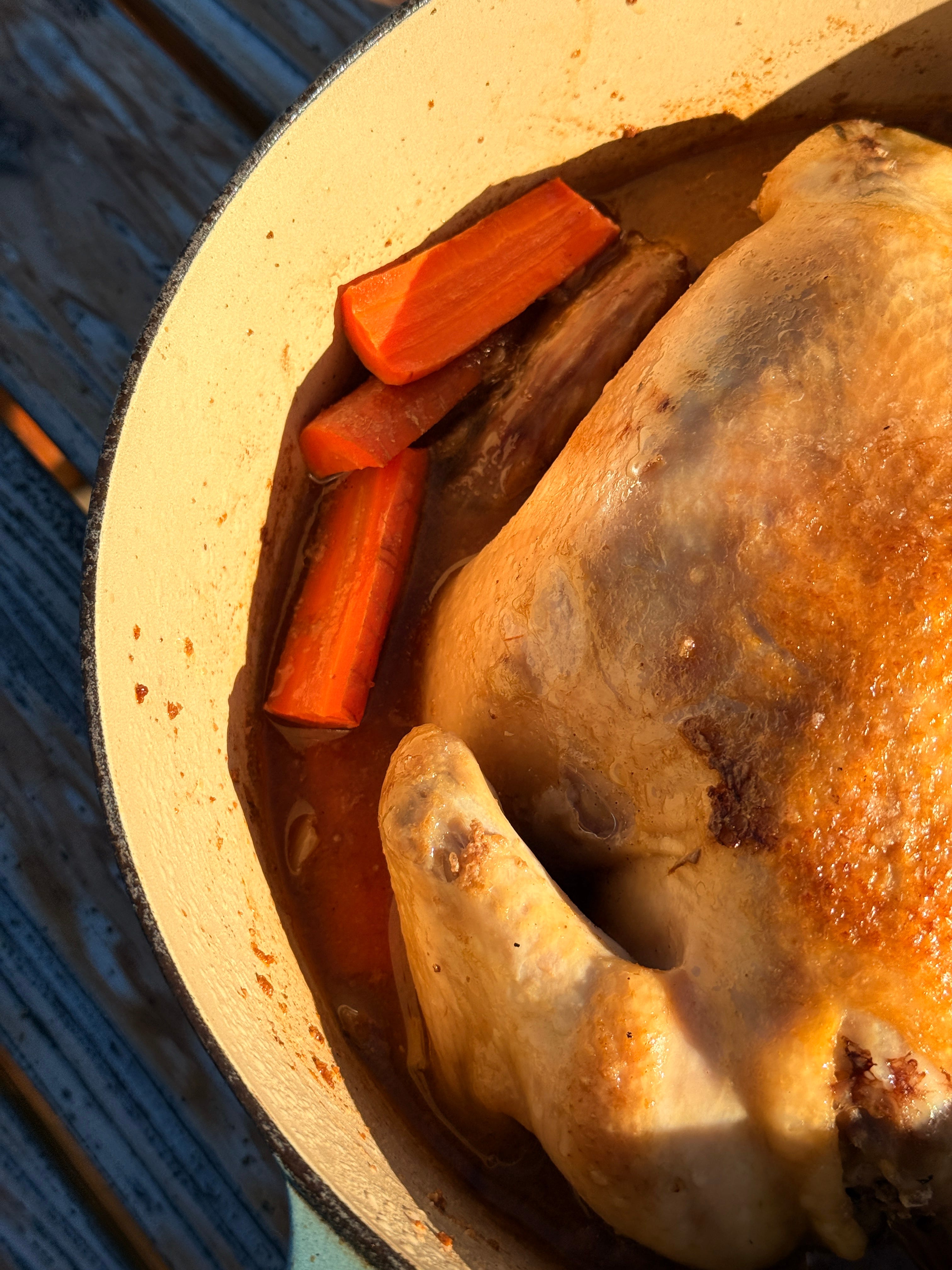
She was a single parent with a narrow margin for error. A whole chicken fit the week the way few other foods could. It was affordable, adaptable, dependable. It entered the house with purpose.
On Sundays, the oven came on early. The chicken was simple. Salt. Heat. Time. As it roasted, the smell moved through the rooms and settled there. It softened the edges of the day. It told me dinner was coming and that it would be enough.
That first night, the chicken stood on its own. Carved generously. Sometimes potatoes roasted alongside it, soaking up fat and salt. Other nights, rice waited quietly on the stove. The food never asked for attention. It delivered it.
As the days passed, the chicken changed.
She turned it into dumplings, tender and buoyant, floating in broth drawn slowly from the bones. Another night it returned with garlic. Not a clove or two, but whole heads, peeled and softened by the oven until they collapsed into sweetness. The structure shifted. The flavor never faltered. Each version arrived distinct, complete.
My mother was creative in a way that did not announce itself. She worked from instinct, not display. She knew how to make what was available feel intentional. She understood, without naming it, why chicken sits at the center of everyday cooking across cultures. It absorbs, adapts, and carries familiarity without becoming fixed.
Years later, I moved to Europe and began to see that same bird through a different lens.
I wanted to refine the poultry I had grown up with, not replace it. I learned to loosen the skin carefully, easing my fingers between skin and flesh without breaking the membrane. I learned to tuck herbed butter beneath the surface so it melted slowly, basting the meat from within. I learned to brine, to season in advance, to give salt time to travel.
I learned why cooks protect the skin. Why they value dryness and restraint. Why heat should be deliberate, never rushed.
All the while, I was a vegan.
I wasn’t cooking to eat the chicken. I was cooking to understand it.
I was studying technique and timing. Learning how flavor is built through care rather than excess. Seeing how discipline sharpens attention, how distance can clarify intention.
What remained unchanged was the role the chicken played. It was still about continuity. About feeding people well. About making something ordinary feel considered.
I think about that now when I cook. How repetition can create trust. How creativity often emerges inside limits. How a single bird can move through a week, across cultures, and through phases of a life, without losing its meaning.
Some lessons arrive quietly, returning again and again, until you finally recognize them.
A whole chicken was one of mine.
My Grandmother’s Roasted Chicken
A dish shaped by lineage, clarified by evolution
NOTE: Chickens should be hormone free, antibiotic free, free range, and fed healthy food. I would strongly counsel not eating chicken unless you can find and afford healthy chicken. We got ours from Farmer Leigh growing up. He came Wednesday mornings and his chickens were a totally different food than the “birds” Mom bought at the grocery store.
This roasted chicken belongs to a long lineage of meals that did more than feed people. It steadied them. The method is spare and deliberate. Salt. Heat. Time. A handful of aromatics chosen not for show, but for how they behave in the body.
What elevates this dish is not novelty, but precision. The bird is seasoned deeply, roasted hot, and left undisturbed. The skin tightens and browns. The meat stays supple. The pan becomes its own quiet sauce. It is the kind of cooking that understands nourishment as structure, not spectacle.
Why This Chicken Endures
This is food that works with the body rather than against it.
Roasting a whole chicken preserves the integrity of its protein, producing a meal that satisfies deeply without heaviness. Cooking the bird skin-on allows collagen and gelatin to develop naturally, contributing to a sense of fullness and ease after eating.
Salt, used confidently, binds with protein and fat, enhancing flavor while supporting hydration and balance. Herbs like thyme and rosemary bring warmth and aromatic depth, long valued in traditional kitchens for their digestive ease. Lemon sharpens the dish just enough to brighten fat and encourage appetite without overstimulation.
Most of all, this is a meal that slows people down. Warm, familiar food eaten without rush has a way of restoring rhythm. That may be its most lasting medicine.
Ingredients
1 whole chicken (3½ to 4½ pounds), preferably air-chilled
2½ teaspoons kosher salt, divided
Freshly ground black pepper
2 tablespoons cultured butter, softened
