Getting Under the Hunger
What I learned my cravings are actually asking for, and the deep work of learning to listen.

It was late and I was eating my third tortilla. Yes, it was organic, sprouted and the healthiest one I could make or find.
I knew it was the third because I had been counting, the way you count when you already know you are going to keep going anyway. These warm comforting tortillas had melted cheese on them, the same after-school snack I had eaten as a child, the one that meant the day was over and I could soothe the intensity of the day. I was standing at the counter in my kitchen. My daughter was asleep. My mother was dead. I was a single parent holding a full-time job and dating seemed so far beyond my capacity that I had stopped thinking about it altogether.
I did not sense that anybody had my back. That was the “true” thing I was standing with in that kitchen. And the tortilla was the one thing I could control, the one comfort that asked nothing of me, that had never let me down, that was warm and simple and mine. Can you sense the irony here?
I had a master’s degree in nutrition by then. A bachelor’s too. I had also begun to examine the research on nutritional psychology. 20 years of working with the human body and what it does with food. I knew, in the way that knowing lives in the mind, that this was not hunger. The backdrop of my upbringing was eating disordered.
But knowing and understanding are not the same thing. I had to override one to get to the other.
What I was learning, ever so slowly, is that hunger is never just about food.
I had spent decades coaching people around what they eat and watching the same thing happen over and over. A craving arrives and it speaks clearly, if you know how to decipher the language. The person who reaches for freshly baked bread with butter at the end of a long day is almost never hungry for bread. She is hungry for a hug, for touch, for someone to take care of her even just for a moment, so she doesn’t have to hold the whole world on her shoulders alone. The comfort of being held is not something a meal can provide. But a meal will stand in for it, night after night, until the pattern becomes visible. Usually around ten pounds at a time.
The person who tears through a bag of chips or crackers or anything crunchy and salty is rarely hungry either. That texture, that specific aggressive crunch, is what frustration sounds like when it has nowhere to go. Anger that has not been spoken. Resentment that has been swallowed instead of expressed, which is its own kind of irony.
Sweet cravings are loneliness. The need for life to be easier than it currently is. The hope that something will soften what is hard.
None of this is weakness. All of it is information.
Getting under the hunger means asking a different question. Not what do I want to eat, but what do I actually need right now that I am not getting.
This is not the intuitive eating that tells you to honor every craving without question. That version, while well-intentioned, can leave a person stranded inside the very patterns they are trying to understand. What I am describing is something older and more demanding. A curiosity about the self. A willingness to sit with the craving for long enough to hear what it is actually saying.
When I finally started doing that work in my own kitchen, in my own life, something shifted that I had not anticipated. The cravings did not disappear. But they became legible. And once you can read them, you have a choice you did not have before. But you have to clear the slate.
Some nights I still make the tortilla. But now I make one, and I eat it slowly, and I know what I am feeding. And sometimes I put down the tortilla entirely and call someone, or go sit near a friend who genuinely cares, or simply name the thing that is asking to be named. I need comfort. I need to not be alone in this. I need someone to tell me it’s all going to be ok.
That naming does something the food never could. It addresses the one component underlying the hunger.
The rehabilitation of the appetite is not a food project. It is a self-knowledge project that happens to take place in the kitchen.
Our taste buds change slowly. Our gut microbiome changes slowly. Our hunger cues that were trained by years of eating for the wrong reasons do not reset overnight. But they do reset. I have watched it happen in my own body and in thousands of other bodies over thirty years. The craving for things that harm begins to quiet when the things underneath it are finally addressed. Real food, chosen with real attention, starts to taste like enough.
I carry a gene associated with obesity. My mother carried it too. It killed her at fifty-nine. I watched her fight it her whole life and lose, and I stood in my kitchen eating my third tortilla telling myself this was the one thing I could control.Then the neighbor called. Penelope had eaten the whole bag of goldfish. The whole pizza. The lunch lady called from school to say she needed to create limits for my daughter at the cafeteria.I could not control any of it. Not my mother’s death, not my daughter’s hunger, not the gene moving quietly through all three of us. The tortilla was never control. It was the wish for it.
What I found, after I stopped pretending otherwise, was something I had not known to look for.
It was my capacity to listen to my wise inner voice. To get under the hunger, in myself and eventually in my daughter, and dialog with it honestly to uncover what was actually there.
That is still my work and it does not end. But it gets quicker and crystalizes and I rebound back to the plumbline of my wholeness as I keep my food real.
I realized that recently I woke up and discovered those cravings that followed me for years have finally said what they needed to say and now there is peace.
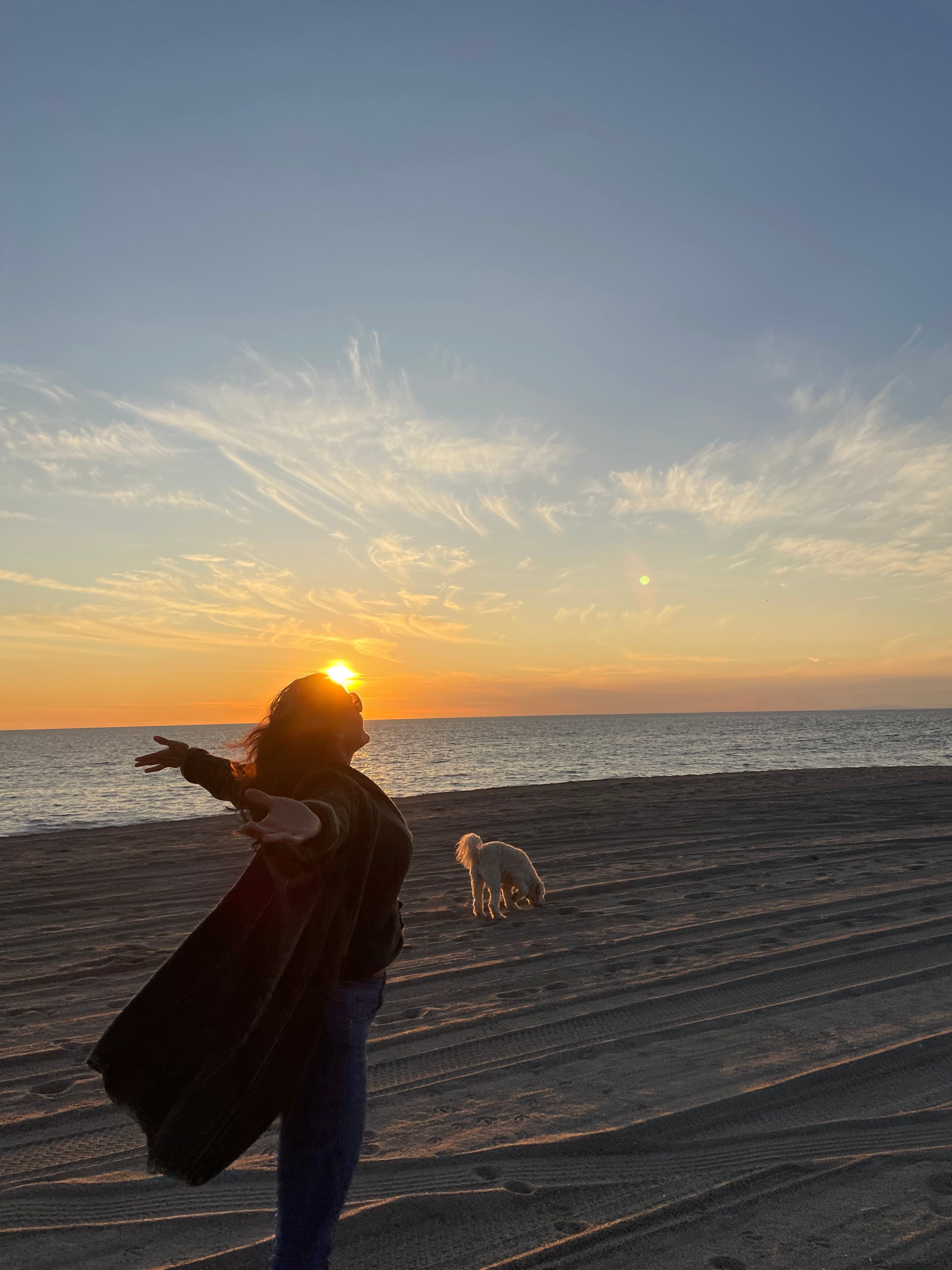
Helene Leeds is a culinary medicine practitioner and MasterChef Season 3 finalist who has spent thirty-five years at the intersection of food, metabolism, and human psychology. Trained in the culinary traditions of France, Germany, Greece, Switzerland, and Asia, she writes about what real cooking does to the body and the mind. She lives in Los Angeles and cooks every day.